
Prayer and Power (Luke 6:12-19)

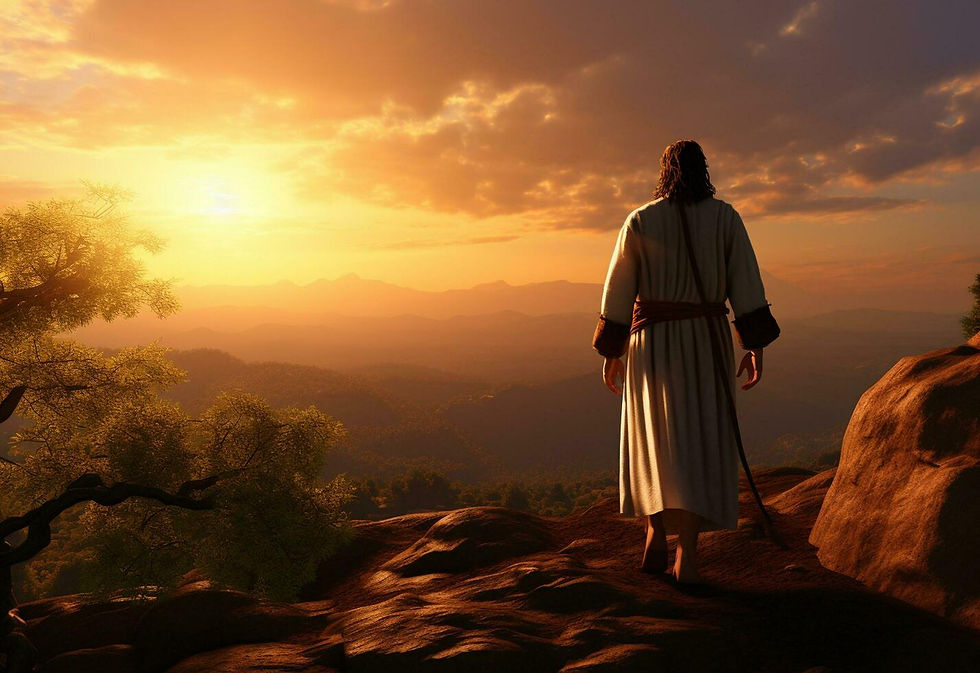
It was at this time that He went off to the mountain to pray, and He spent the whole night in prayer to God.
It is not easy dealing with scribes and Pharisees! After Jesus has been strictly scrutinized for every word and action in His ministry by these legalists, and after He has answered their questions and revealed their errors, He is now ready for an extended time of prayer to His Father. Since the text says, “It was at this time…”, it is clear that what is taking place is a follow-up to the events previously mentioned in the sixth chapter of Luke.
How many times have you, “went off to the mountain to pray…”? Ok, maybe it wasn’t a mountain, but let me take this one step further: when was the last time you spent “the whole night in prayer to God”? Jesus sets an amazing example for us here. When we face the adversary, we need to pray! When we come up against a modern-day Pharisee, we need to go somewhere (perhaps a mountain, maybe our closet…) and pray! When we say we are followers of Jesus, we need to spend adequate time in prayer to God (perhaps even a whole night).
Most of the time, this prayer is said to be so long and focused because Jesus was getting ready to select His apostles. While this is partially true, keep in mind that Jesus was walking away from a very difficult situation where some scribes and Pharisees were seeking to destroy Him. Jesus needed some time to talk with His Father about the events taking place in His life. We often need this time as well to cast our cares on God, because He cares for us. Prayer is a blessing that allows us to pour out our hearts to God as we approach the throne of grace in times of need, seeking His wisdom and care.
And when day came, He called His disciples to Him and chose twelve of them, whom He also named as apostles: Simon, whom He also named Peter, and Andrew his brother; and James and John; and Philip and Bartholomew; and Matthew and Thomas; James {the son} of Alphaeus, and Simon who was called the Zealot; Judas {the son} of James, and Judas Iscariot, who became a traitor.
Mark informs us in his gospel account that what Jesus was doing here was choosing men so that, “they would be with Him and that He {could} send them out to preach” (Mark 3:14). For some, it is hard to see the distinction between the disciples and the apostles (the twelve). A disciple is defined as a learner and a follower, while an apostle is “one sent” (an ambassador) for a special mission or purpose. In this case, Jesus was selecting companions and those whom He could send to preach the gospel.
I want you to think about the following questions: Does God desire companionship? Did Jesus want friends and fellow workers in His life? Unequivocally, yes! He also wants you to be a friend to Him through following Him and keeping His commandments (See John 15:8-17)
We will treat the list of apostles who were chosen in the same way as we dealt with the genealogy in Luke’s gospel. While we do not intend to offer a complete character study for each one listed, we will make some evaluations and helpful points where necessary.
The very first truth about all of the chosen apostles is that they were just ordinary men. From fishermen to tax-collectors, these men were simple. God has selected ordinary men to do great things throughout the history of the world. God makes the ordinary, EXTRA-ordinary. Can you do something extraordinary in service to the Lord (this year, this month, this week, this day)? Will you hear His voice as He calls you to come and serve Him? It was with twelve ordinary men that Jesus changed the world. Imagine what He could do if all of us answered His call of duty and went out to share the gospel and love of Christ with others (Matt. 28:18-20).
The next interesting point is that when we come to follow Jesus, He changes us to become what we were intended to be from the beginning. In the text, one example is with Simon, whom Jesus called Peter. You know how, when you are with your friends, you will often come up with a nickname to call them by, based on their qualities and characteristics. In this text, Simon was called Peter (petros), which means “rock”. Jesus saw something in Peter that resembled a rock, and He wanted him to know this was significant. While Peter would face shaky moments in service to Jesus, even denying the Lord, he would be the one chosen to help establish the church, with Jesus Christ being the rock or Chief Cornerstone. The Lord sees potential in all of us, and we need to find those areas where we will be most effective in our service to Him. What would the Lord call you? (Little faith, old faithful, maybe you are another rock?) You determine this name with your character and how you desire to live your life. What name would the Lord give you? Think about it! Whatever your name is, you need to make sure that Jesus writes it in the book of life and that He recognizes you on the last day. Will He know you and remember your dedicated service to Him? Will He welcome you into heaven?
One final evaluation I want to cover before moving on from this portion of our text is that even though these men were ordinary, they didn’t all come from the same background. As we have pointed out earlier, Peter was a fisherman, and Matthew was a tax collector. Fishermen were considered to be uneducated and illiterate, and tax collectors were equated with the worst of all sinners because they took more from the people than what they were commanded to take. Peter would normally pay a tax collector like Matthew for the fish he would catch from night to night and sell them in the marketplace. This didn’t hinder them from serving the Lord together. One particular person who was called to be an apostle would have had a problem with Matthew had they not been followers of Jesus Christ. Simon the Zealot was a nationalist and normally would have tried to destroy every traitor or Roman that he could get his hands on. Since Jesus came into his life with His message of loving forgiveness and acceptance, these two apostles could work together in harmony as followers of Christ.
I would be teaching inadequately if I said that after we obey the gospel, we never have differences of opinion or various likes and dislikes that don’t always mix well with other Christians. We are going to find our peculiarities as we study, work, and worship together. William Barclay once wrote, “When men are truly Christian the most diverse and divergent characters and types can live at peace together…It is only in Christ that we can solve the problem of living together; and that is so because even the most opposite people are united because they both love Him. If we really love Him, we will also love each other.”
Lamar wrote of the apostles that, “They differ in native qualities in temper, tastes, dispositions, habits; and yet all their divergences are to be harmonized, all their differences unified, and all their energies concentrated, and directed to a common object and end. The result has abundantly justified the wisdom of the choice. These plain men, telling, in their own plain way, the simple but wonderful story of the cross, have exerted an influence upon the world that exceeds all description—that surpasses all imagination.”
"Jesus came down with them and stood on a level place; and {there was} a large crowd of His disciples, and a great throng of people from all Judea and Jerusalem and the coastal region of Tyre and Sidon, who had come to hear Him and to be healed of their diseases; and those who were troubled with unclean spirits were being cured. And all the people were trying to touch Him, for power was coming from Him and healing {them} all.”
Even though Jesus is Lord of heaven and earth and has been exalted by God to rule and reign over the eternal kingdom, He always stands on a level place with His followers to lead them. The text says, “Jesus came down with them and stood on a level place.” While this text probably means that they found a portion of flat ground, it is certainly important to remember where the Lord stands with us (See Matt. 28:20; also Phil. 2:5-11). If we enter the dark valley or we stand on the peak of the highest mountain, Jesus is going to be there. What a comforting thought that the head of this Divine organization, the church, comes down to His people and fulfills their every need. He is in us, He is among us, and He will never leave us nor forsake us. Praise God for that truth.
When Jesus and His disciples were coming down from the mountain, and came to a level plain, they found a large crowd looking for Jesus. All hailing from different places, they were coming to hear Him teach and receive His healing touch. When you realize what Jesus has to offer, you will climb to great heights to find Him. It appears that on the plain where the disciples met Jesus, they were standing between two peaks and climbed a good distance to find Him. Jesus doesn’t let them down, as he not only heals all their illnesses, but He preaches the greatest sermon ever taught, known as the Sermon on the Mount.
Jesus stood in the plain and received those who came to Him, while healing their ailments. Jesus then positioned His audience and sat down, and from this mountainside Jesus preached the sermon that has changed the hearts of men for ages.
We will deal with this sermon in the next few episodes of this series. For now, we will conclude our lesson with an invitation for anyone who needs to come to Jesus for healing and listening to His words of instruction. If this applies to you, I beg you to come and see Jesus today. The text states, “And all the people were trying to touch Him, for power was coming from Him and healing {them} all.” All it takes is for you to come to Jesus in obedience to His words, and you can be healed of sin. There is power in the blood of Christ that heals today. We must come in contact with that blood to be restored. Jesus is not asking you to climb a mountain to get to Him for your cleansing. Jesus said,
“He who has believed and has been baptized shall be saved; but he who has disbelieved shall be condemned.”
The Lord touches us in baptism as He removes the sin that has hindered us from being spiritually strong. Colossians 2:11-13 says,
"and in Him you were also circumcised with a circumcision made without hands, in the removal of the body of the flesh by the circumcision of Christ; having been buried with Him in baptism, in which you were also raised up with Him through faith in the working of God, who raised Him from the dead. When you were dead in your transgressions and the uncircumcision of your flesh, He made you alive together with Him, having forgiven us all our transgressions…”
Paul, who would later become an apostle of Jesus Christ, wrote in Romans 6:3-4,
“Or do you not know that all of us who have been baptized into Christ Jesus have been baptized into His death? Therefore we have been buried with Him through baptism into death, so that as Christ was raised from the dead through the glory of the Father, so we too might walk in newness of life.”
The apostle Peter once wrote in his epistle in I Peter 3:21,
“…baptism now saves you-- not the removal of dirt from the flesh, but an appeal to God for a good conscience-- through the resurrection of Jesus Christ…”
Are you ready to obey the Lord in coming in obedience to the gospel? Are you ready to be cleansed of sin and its shame? Please reach out, and I would love to help you with your spiritual needs.


Comments